01 · HOSPITALITY
Comfort that performs
High-efficiency heating, cooling and hot water for hotels, resorts, serviced apartments and leisure facilities.

Five ways to move heat instead of making it - air source, water source, hybrid, absorption and ground source. Explore how each Biatherm heat pump works, where it fits, and the technical specifications behind it.
Our next-generation heat pump technology is engineered to efficiently extract, upgrade, and transfer low-grade thermal energy from ambient air, water, or ground sources, delivering highly efficient heating solutions for domestic, commercial, and industrial applications.
Utilizing an advanced reverse vapor-compression refrigeration cycle, the system maximizes thermodynamic performance through high-efficiency compressors, precision electronic controls, advanced heat exchangers, and intelligent system management. This integrated design ensures reliable operation, optimized energy utilization, and consistent thermal output across a wide range of operating conditions.
Designed for demanding environments, our heat pump systems provide a high Coefficient of Performance (COP), superior energy efficiency, stable heating capacity, and reduced electrical consumption, resulting in lower operating costs and reduced lifecycle expenditures. Compared to conventional heating technologies, they significantly decrease carbon emissions and support sustainability objectives.
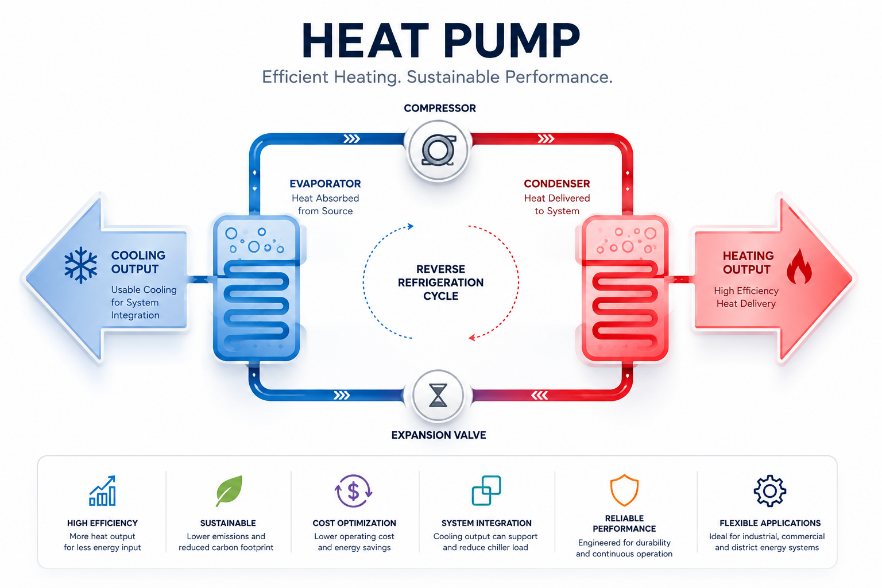
Beyond heating, the system can simultaneously generate useful cooling energy, which can be integrated with the existing cooling infrastructure. By offsetting a portion of the cooling demand, the heat pump reduces the required capacity and operating hours of conventional chillers, resulting in lower peak loads, improved system efficiency, and reduced total cooling energy costs. This integrated heating and cooling approach enables energy recovery, optimized plant operation, and enhanced overall system efficiency, providing a scalable and future-ready pathway toward electrification, energy optimization, decarbonization, and sustainable thermal infrastructure development.
Every Biatherm heat pump is built on the same vapour-compression fundamentals. What changes is the heat source - and that choice shapes efficiency, footprint and where each system fits best.
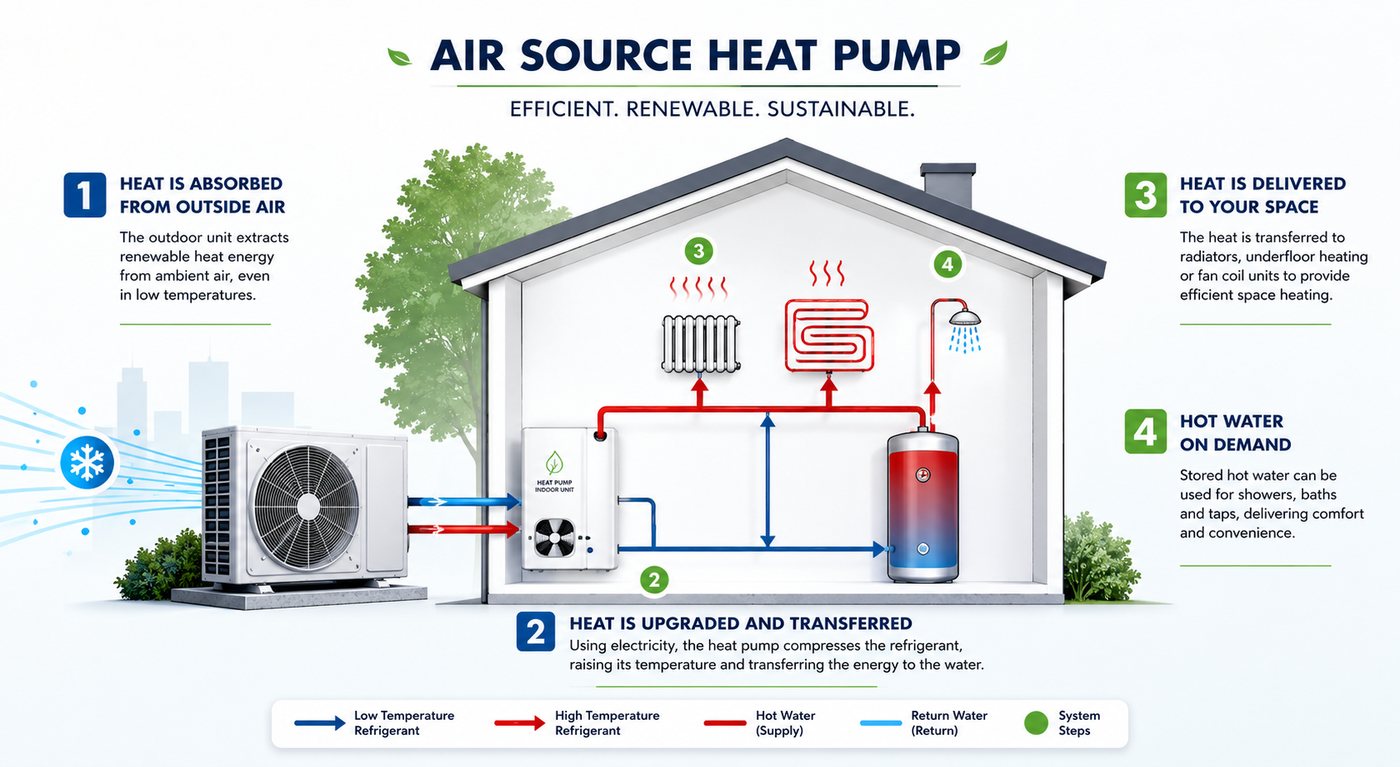
Harness the renewable thermal energy available in ambient air and convert it into efficient, reliable heating, cooling, and hot water solutions. Our Air Source Heat Pumps (ASHPs) utilize advanced vapor-compression technology to extract heat from the environment and transfer it where it is needed most, delivering exceptional performance with significantly lower energy consumption than conventional heating systems.
Engineered for high seasonal efficiency, intelligent operation, and dependable year-round performance, ASHP systems help reduce operating costs, minimize peak electrical demand, and lower carbon emissions. By replacing traditional fossil-fuel-based heating methods, they support the transition toward sustainable, low-carbon, and high-performance HVAC infrastructure.
Whether for residential, commercial, or industrial applications, our ASHP solutions provide a cost-effective pathway to energy optimization, electrification, and long-term environmental sustainability.
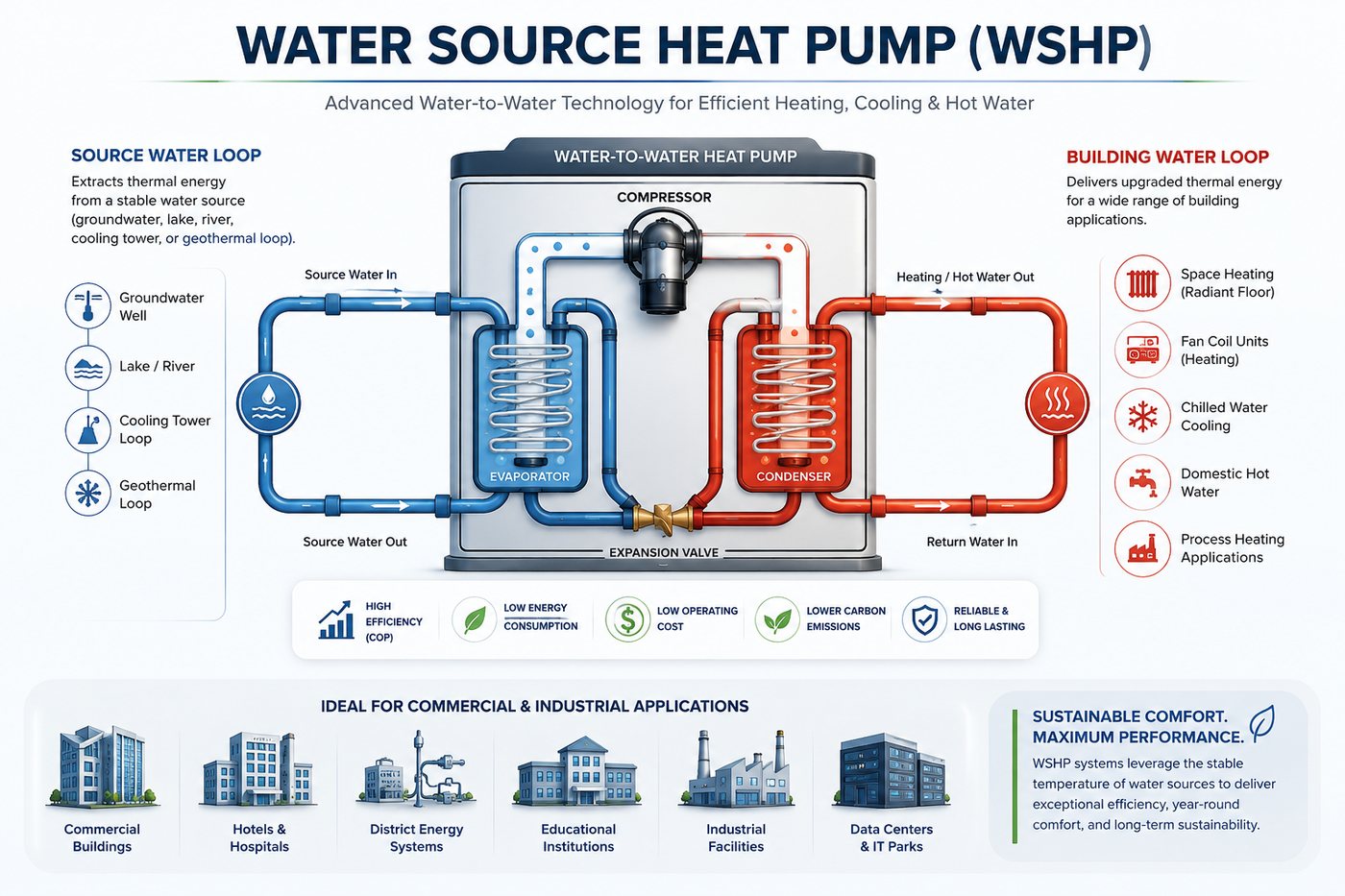
Water Source Heat Pumps (WSHPs) deliver high-efficiency heating, cooling, and hot water by transferring thermal energy between interconnected water loops. Using an advanced refrigeration cycle, WSHPs efficiently extract, upgrade, and distribute thermal energy to meet year-round building and process requirements.
Water-to-Water Heat Pumps are particularly suited to hydronic applications, integrating seamlessly with radiant systems, fan coil units, chilled-water networks, and domestic hot water systems. The stable temperature of the water source enables consistent performance, high COP, and optimized energy utilization.
Engineered for commercial, industrial, and large-scale facilities, our WSHP solutions provide reduced energy consumption, lower operating costs, and lower carbon emissions, with the flexibility to support both new installations and energy-efficient retrofits.
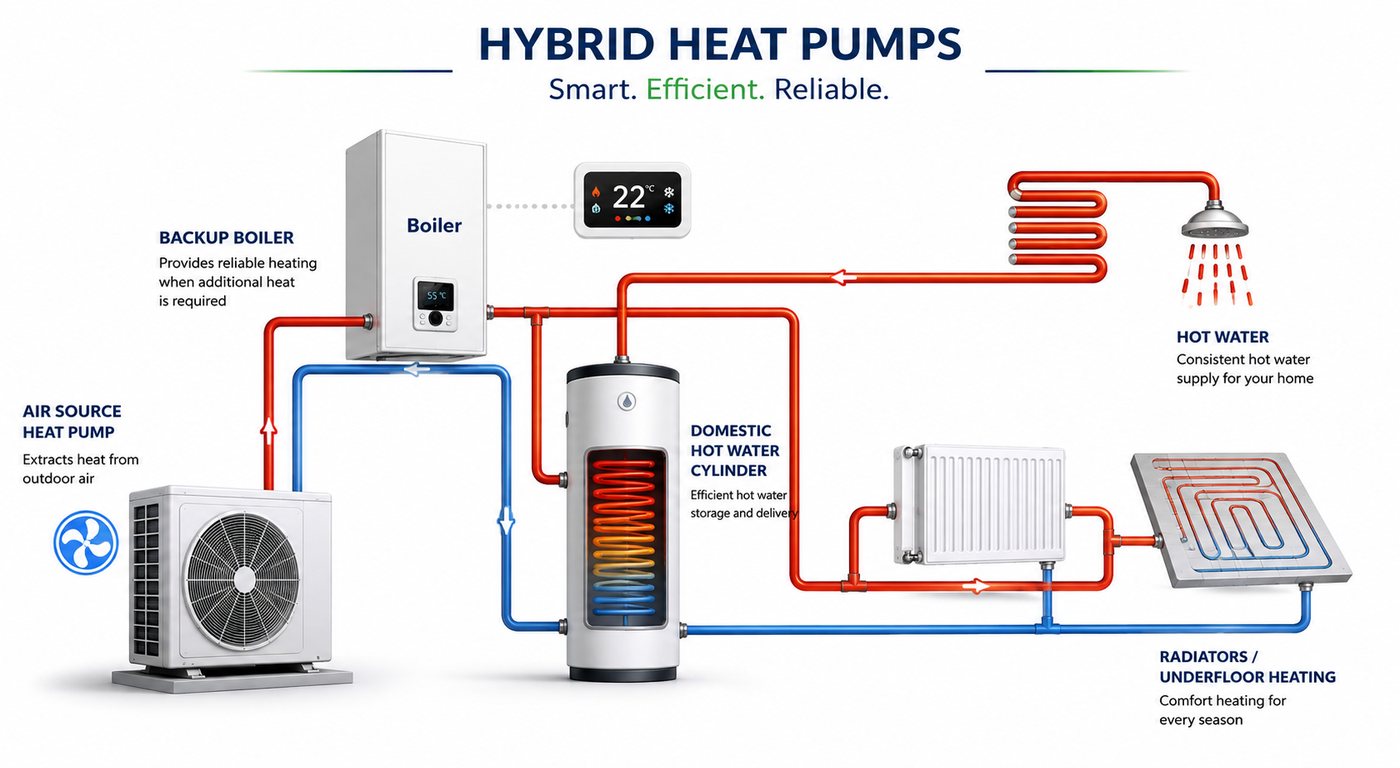
Hybrid Heat Pumps (HHPs) integrate high-efficiency electric heat pump technology with conventional heating systems, such as gas boilers, intelligently optimizing the energy source according to ambient conditions and thermal demand.
Engineered for high efficiency, lower energy consumption, reduced operating costs, and lower carbon emissions, HHPs offer a flexible solution for both new installations and retrofit applications.
Available as a custom-engineered solution, developed on a case-by-case basis to meet specific project requirements, energy sources, and operating conditions.
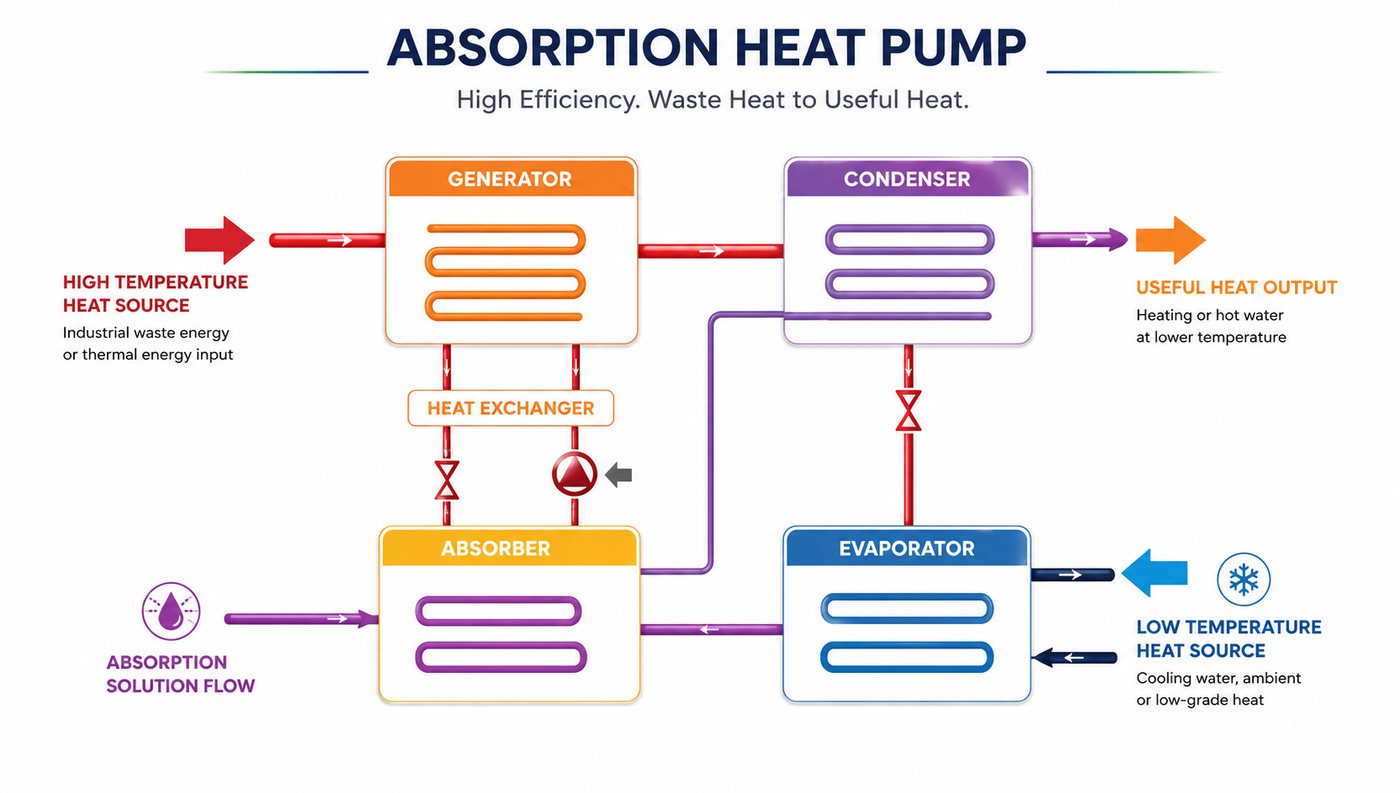
Absorption Heat Pumps (AHPs) use thermal energy-such as waste heat, natural gas, geothermal, or solar energy-to deliver efficient heating and hot water without relying primarily on electrical compression.
Engineered for commercial, industrial, and district energy applications, AHPs maximize available heat sources, reduce electrical demand and operating costs, and support high-capacity, low-carbon thermal solutions.
Available as a custom-engineered solution, developed on a case-by-case basis to meet specific project requirements, energy sources, and operating conditions.
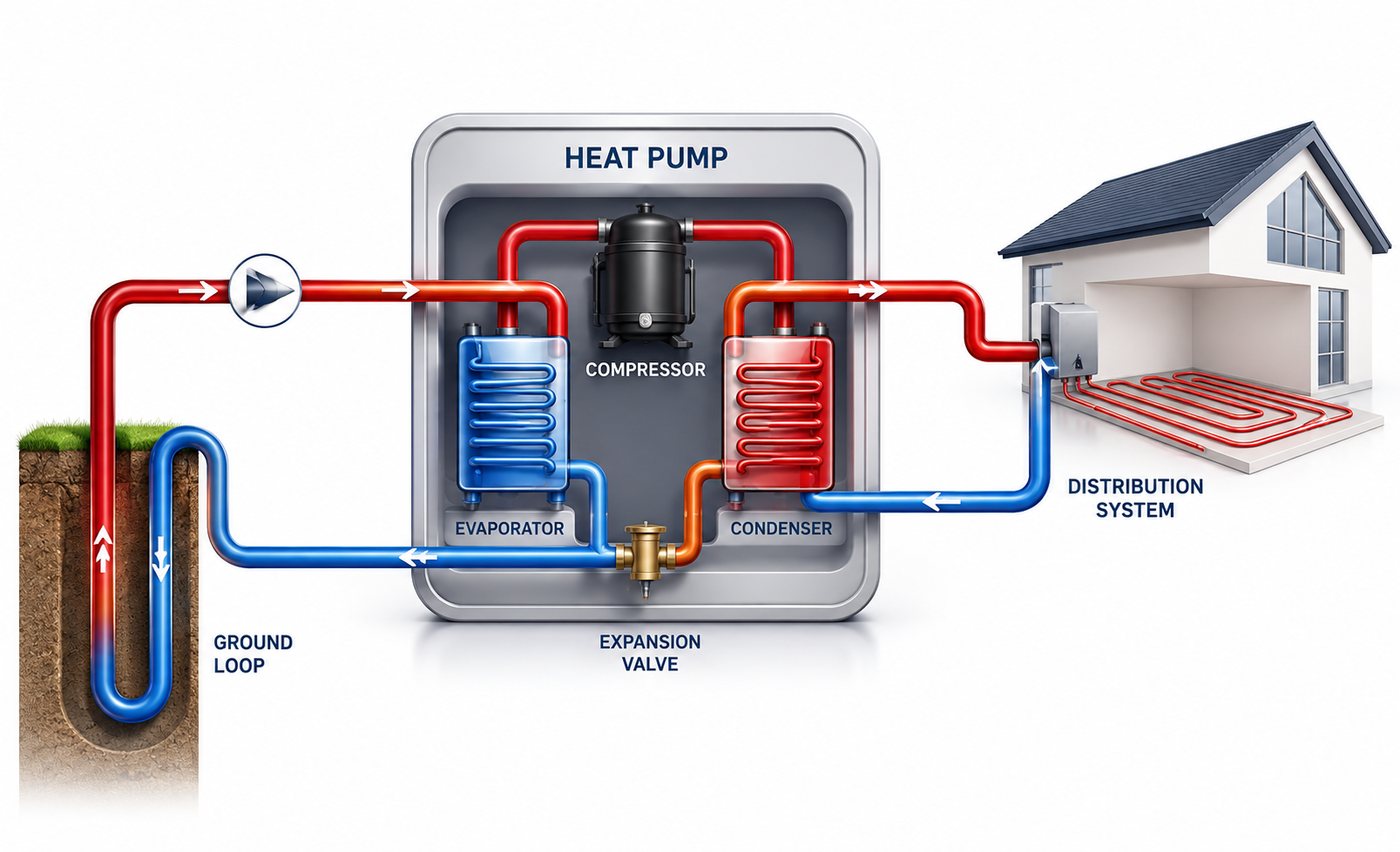
Ground Source Heat Pumps (GSHPs) utilize the Earth's stable underground temperatures to deliver high-efficiency heating and cooling. Through underground heat-exchange loops, GSHPs transfer thermal energy to or from the ground, providing consistent year-round performance, reduced energy consumption, and lower carbon emissions-ideal for high-performance commercial and sustainable buildings.
Presented for informational purposes only, as feasibility and implementation depend heavily on-site conditions, geology, climate, and site-specific requirements.
Biatherm's core catalogue is built around two proven technologies - Air-to-Water and Water-to-Water heat pumps. Here's the engineering detail behind each.
Biatherm Solutions primarily offers two core heat pump technologies: Air-to-Water and Water-to-Water Heat Pumps, engineered for high efficiency, flexibility, and reliable performance across a wide range of applications. Hybrid Heat Pumps and Absorption Heat Pumps are available as custom-engineered solutions, developed on a case-by-case basis to meet specific project requirements, energy sources, and operating conditions. Ground Source Heat Pumps (GSHPs) are presented for informational purposes only, as their feasibility and implementation depend heavily on-site conditions, geology, climate, and site-specific requirements.
Air-to-Water Heat Pumps (AWHPs) utilize ambient air as a renewable energy source to heat or cool water through a refrigerant cycle. A reversing valve enables seasonal operation-either heating or cooling. Advanced systems with four-pipe configurations allow simultaneous heating and cooling.
Water-to-water heat pumps are designed for high-efficiency thermal energy exchange between two water loops, making them ideal for hydronic systems in commercial, institutional, and high-rise residential buildings. These systems offer reliable heating and cooling with outstanding energy performance and operational flexibility.
Biatherm heat pumps deliver intelligent heating, cooling and hot water engineered for performance, efficiency and reliability across diverse sectors.

High-efficiency heating, cooling and hot water for hotels, resorts, serviced apartments and leisure facilities.
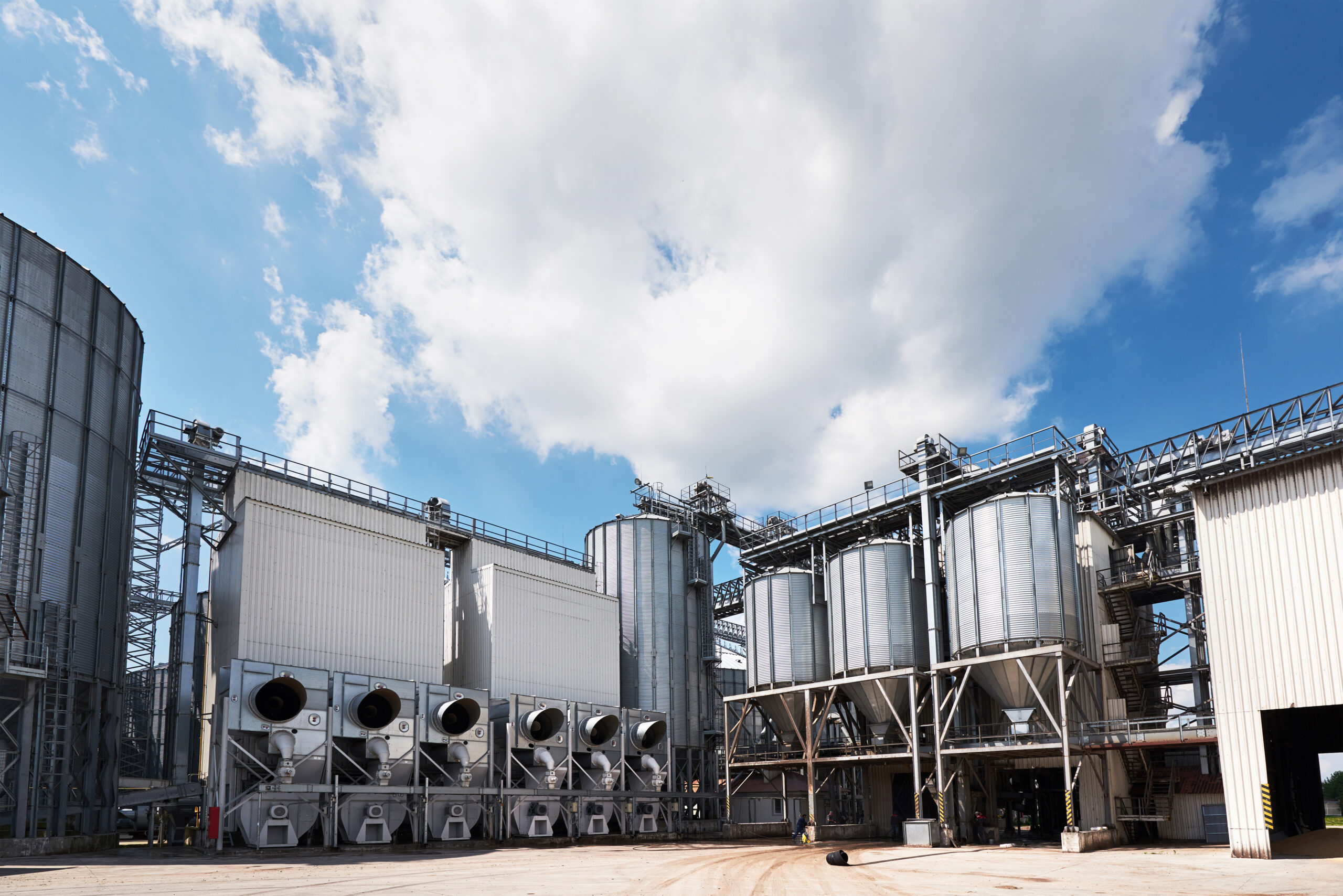
Robust, high-capacity thermal systems for demanding industrial processes and continuous-operation environments.

Low-carbon heating, cooling and recovery solutions that support organisations' sustainability goals.